

The health and fitness industry sells something deeply personal. It does not just sell coaching, programs, supplements, or memberships. It sells hope, confidence, relief, control, and the promise of becoming a better version of yourself. That is exactly why misleading marketing works so well in this space. When a message can shape whether someone buys a service or product, Canadian law treats the overall impression as important, not just the literal wording. At the same time, broader health misinformation has been shown to negatively affect health behaviors and trust.
One of the most common tactics is to create insecurity first and sell the solution second. First the ad tells people their body, habits, hormones, metabolism, posture, or pain are the problem. Then it makes that problem feel urgent. Then it offers the fix. That is why so much health and fitness marketing leans on phrases like “reset,” “heal,” “fix,” “unlock,” or “finally get the body you deserve.” In practice, that framing often matters more than the evidence. Regulators are clear that health related claims should be truthful, not misleading, and backed by appropriate substantiation.
Where Bodybuilding Can Have A Bad Impact.
Bodybuilding itself is not the problem. It can teach discipline, consistency, patience, and a serious respect for training detail. The issue starts when a niche physique standard gets imported into mainstream health marketing without context.
A lot of physique focused content does not simply show people exercising or being healthy. It centers one idealized look: lean, muscular, visually striking, and highly appearance focused. Research on fitspiration notes that this kind of imagery largely promotes one idealized body type, and fitspiration reviews describe it as typically showing a lean and muscular body while increasing focus on appearance, diet, and comparison.
That does not mean bodybuilding is bad. It means bodybuilding aesthetics can have a bad impact when they are presented as the default standard everyone should aim for, or as the likely outcome of ordinary training. Once that happens, people stop seeing a specialized sport aesthetic and start seeing a supposed benchmark for normal success. Research has linked exposure to fitspiration content with more appearance comparison, more internalization of the muscular ideal, and poorer body image outcomes.

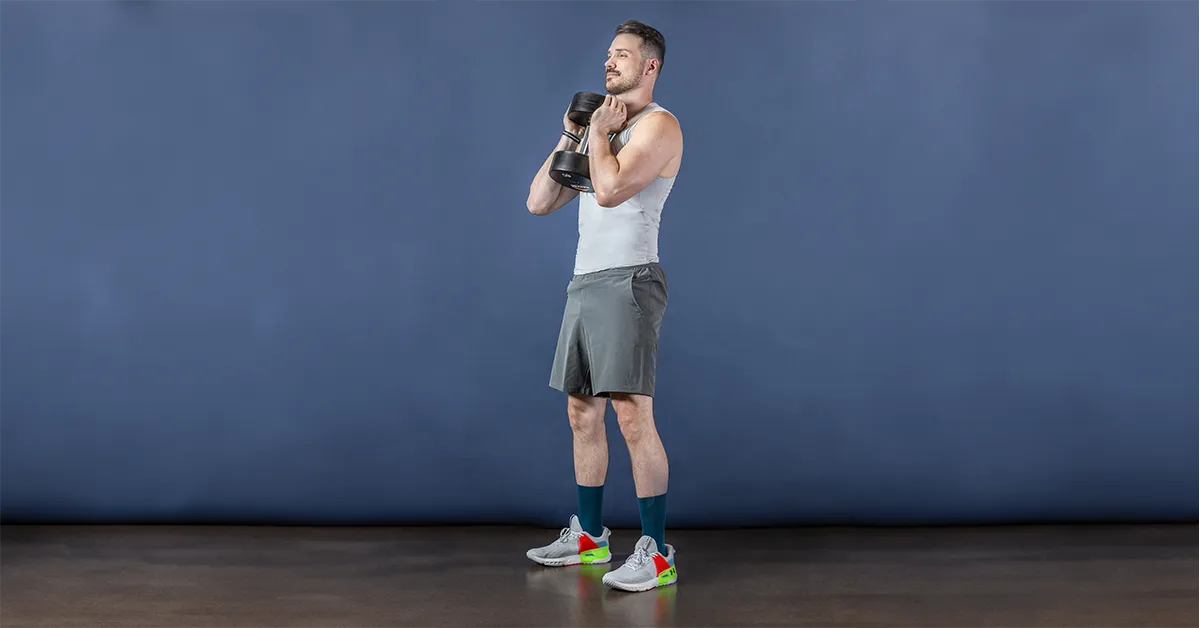
Same Guy. Same Day. Different Picture
Body Shaming As A Sales Tool.
This is where body shaming enters the picture. Sometimes it is direct, with marketing that mocks body fat, softness, aging, or “letting yourself go.” Sometimes it is more polished and indirect, where certain bodies are framed as disciplined and respectable while other bodies are framed as failure, laziness, or neglect. The effect is the same. Shame becomes part of the sales funnel.
That matters because weight stigma is not harmless motivation. A systematic review found that weight teasing, discrimination, and internalized weight stigma were associated with reduced physical activity in most studies reviewed. In other words, shaming people about their bodies does not just risk hurting feelings. It can push people away from movement and exercise entirely.
Before and after marketing often amplifies this problem. It looks like proof, but it is easily shaped by lighting, posing, pump, dehydration, camera angle, and cherry picked outliers. Transformation imagery can also carry a subtler message: that the “after” body is not just different, but morally better. That is where health marketing starts to drift away from education and into manipulation.
The Lie That Hard Work Guarantees A Specific Body
Another deeply misleading idea in fitness marketing is the promise that hard work will produce a specific body if someone is disciplined enough. Hard work matters. Training quality matters. Nutrition matters. Consistency matters. But the idea that effort alone guarantees a particular outcome is biologically false.
Research on exercise adaptation shows that training responses are shaped by both modifiable factors and non modifiable factors. A 2022 review on resistance exercise states that responses are composed of non modifiable factors such as age, sex, and genetics, along with modifiable factors. The HERITAGE Family Study also reported a maximal heritability estimate of 47 percent for improvement in VO2max response to training.
That has real world implications. Two people can both train seriously and do many of the same things, yet get meaningfully different outcomes. Genetics influences far more than most marketing admits, including traits related to body fat distribution and aspects of performance potential. Reviews of body fat distribution genetics describe these traits as heritable and strongly influenced by genetic factors.
That is why the message “anyone can build any body if they work hard enough” is not inspiring. It is misleading. People do not choose their bone structure, muscle insertions, limb lengths, fat distribution, or broader genetic ceiling. They can absolutely improve, often dramatically, but they cannot simply will themselves into any physique they see online. MedlinePlus puts it plainly: a person’s genetic makeup cannot be altered, even though lifestyle changes can still improve health outcomes.
Predatory marketing depends on ignoring that reality. It sells a fantasy first, then blames the customer when the fantasy does not happen. Instead of admitting that outcomes vary and biology matters, the industry often tells people they failed because they lacked discipline, consistency, or desire. That is not honest coaching. It is a way to protect the promise by making the customer carry the blame.

Pain And Health Are Exploited The Same Way
OThis gets even more serious when marketing moves from aesthetics into health and pain. People in pain are often scared, frustrated, and tired of uncertainty. That makes them especially vulnerable to false certainty.
A common tactic is to take a complex problem and reduce it to one dramatic “root cause.” Suddenly all pain is blamed on one posture flaw, one weak muscle, one misalignment, one inflamed tissue, one MRI finding, or one hidden toxin. Then the cure is sold right behind the diagnosis: a gadget, supplement, posture system, traction device, brace, injection package, or expensive corrective program. The message is emotionally powerful because it replaces uncertainty with a simple story. The problem is that pain, especially persistent pain, is often more complex than that. WHO’s guideline on chronic low back pain emphasizes evidence based non surgical management and specifically advises against interventions such as lumbar braces, traction, and opioids for chronic primary low back pain.
Low back pain is one of the clearest examples of how this gets exploited. Imaging feels objective, so it gets overused in marketing and overvalued by patients. But Choosing Wisely Canada recommends not imaging low back pain unless red flags are present, and NICE says not to routinely offer imaging in a non specialist setting for low back pain with or without sciatica. NICE also emphasizes reassurance, staying active, self management, and exercise based care, not fear based overmedicalization.
That matters because the scan itself can become part of the sales funnel. Once someone is frightened by a report, even if the findings are common and may not explain the pain well, they become easier to sell to. A scary narrative about a fragile spine or a body that is “out of alignment” creates urgency, and urgency makes people buy. Evidence based care usually looks less dramatic than that. It tends to involve thoughtful assessment, screening for serious pathology where appropriate, realistic education, progressive activity, and treatment matched to the person rather than to a marketing script.
The same pattern shows up in broader health claims. Detoxes, hormone resets, inflammation cures, and miracle recovery products are often marketed with scientific sounding language but weak evidence. The CDC’s guidance states that nonopioid therapies are preferred for subacute and chronic pain, with clinicians asked to maximize nonpharmacologic and nonopioid approaches as appropriate. That is a call for evidence based care, not a licence for every wellness product on the internet to claim it heals pain.

Supplements, Influencers, Non Evidence Based Solutions
The supplement and influencer side of the industry pushes all of this even further. The FTC says claims about the benefits and safety of health related products should be truthful, not misleading, and supported by evidence. The FDA states that a product sold as a dietary supplement cannot legally be marketed as treating, preventing, or curing a specific disease.
But a lot of marketing tries to get as close to that line as possible without saying the quiet part out loud. A product is said to “support recovery,” “balance hormones,” “optimize inflammation,” or “unlock healing,” while the visuals and testimonials imply much more. Under Canada’s Competition Act, the general impression matters. That is important, because misleading marketing is not just about literal wording. It is also about what consumers are led to believe.
Influencer marketing adds another layer. The Competition Bureau says influencers should disclose all material connections to the products or services they promote, because those connections can affect how consumers judge their independence. When physique, confidence, authority, and hidden sponsorship all get bundled together, people are not just evaluating evidence. They are responding to status, identity, and aspiration.
What Ethical Marketing Would Look Like
Ethical marketing in health and fitness is still persuasive, but it is honest. It does not shame people into buying. It does not pretend a bodybuilding aesthetic is the same thing as health. It does not claim that hard work guarantees a specific body. It does not tell people in pain that there is one secret cause and one miracle fix. It does not use scientific sounding language to hide weak evidence.
Instead, it tells the truth. Training can improve health, strength, function, confidence, and appearance. Pain can often improve with good care. But outcomes vary, genetics matter, context matters, and no honest coach, clinic, or company can promise a precise body or guaranteed cure on demand. That kind of marketing may be less dramatic, but it respects people instead of exploiting them.
Sources
1. Competition Bureau Canada, False or Misleading Representations and Deceptive Marketing Practices
2. WHO Europe, Infodemics and misinformation negatively affect people’s health behaviours
3. FTC, Health Products Compliance Guidance
https://www.ftc.gov/system/files/ftc_gov/pdf/Health-Products-Compliance-Guidance.pdf
4. FDA, Questions and Answers on Dietary Supplements
5. PubMed, Appearance comparison on Instagram: The impact of fitspiration and transformation imagery on young women’s body satisfaction
https://pubmed.ncbi.nlm.nih.gov/37708721
6. PubMed, Effects of fitspiration content on body image: a systematic review
https://pubmed.ncbi.nlm.nih.gov/36401082
7. PubMed, Is weight stigma associated with physical activity? A systematic review
https://pubmed.ncbi.nlm.nih.gov/34747131
8. PMC, The non modifiable factors age, gender, and genetics influence resistance exercise
https://pmc.ncbi.nlm.nih.gov/articles/PMC9510838
9. PMC, The HERITAGE Family Study
https://pmc.ncbi.nlm.nih.gov/articles/PMC9012529
10. PMC, Genetics of Body Fat Distribution
https://pmc.ncbi.nlm.nih.gov/articles/PMC8228180
11. MedlinePlus Genetics, What does it mean to have a genetic predisposition to a disease?
https://medlineplus.gov/genetics/understanding/mutationsanddisorders/predisposition
12. WHO, WHO releases guidelines on chronic low back pain
https://www.who.int/news/item/07-12-2023-who-releases-guidelines-on-chronic-low-back-pain
13. Choosing Wisely Canada, Lower Back Pain Imaging
14. NICE, Low back pain and sciatica in over 16s: assessment and management
https://www.nice.org.uk/guidance/ng59/chapter/recommendations
15. CDC, Guideline Recommendations and Guiding Principles
https://www.cdc.gov/overdose-prevention/hcp/clinical-guidance/recommendations-and-principles.html
16. Competition Bureau Canada, Influencer marketing and the Competition Act
Interested to learn more? Contact Zenith today.
Contact Us